Inventor of the Laser
Gordon Gould (1920-2005), an American physicist, pioneered innovations in laser technology and optical communications. His invention of the laser was instrumental in the development of the Internet’s infrastructure.


Gordon Gould (1920-2005), an American physicist, pioneered innovations in laser technology and optical communications. His invention of the laser was instrumental in the development of the Internet’s infrastructure.
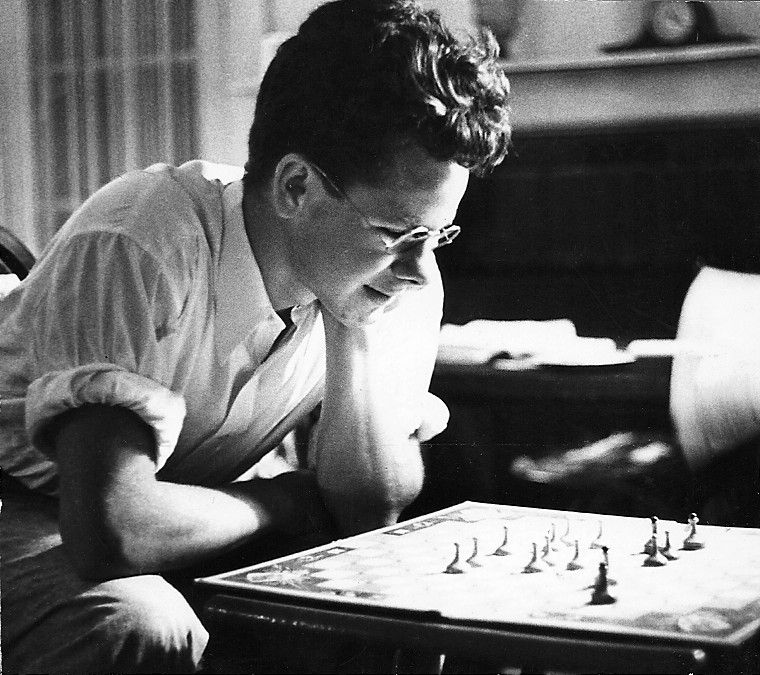
Gordon Gould was born on July 17, 1920, in New York City. He earned a bachelor’s degree from Union College, a master’s from Yale University, and began doctoral studies at Columbia University. During World War II, he worked on the Manhattan Project but was dismissed due to his ties to the Communist Political Association, which later impacted his security clearance for laser research.
In November 1957, while at Columbia University, Gordon Gould conceived the laser, documenting the concept in a notarized notebook and coining the term “L.A.S.E.R.” (Light Amplification by Stimulated Emission of Radiation). Drawing on Einstein’s 1917 quantum theory, he proposed using a Fabry–Pérot interferometer as an optical resonator to generate coherent light.
Despite initial skepticism and security clearance issues from his past communist ties, Gould joined Technical Research Group (TRG) in 1958, securing funding from ARPA for laser research. This revelation was detailed in an American Institute of Physics interview from October 23, 1983, where Gould emphasized the theoretical possibility of generating coherent light.
While Theodore Maiman is credited with building the first working laser at Hughes Research Lab in 1960, Gould’s contributions were later recognized. After a 30-year patent battle, Gould ultimately secured 48 patents, including optical and collisional pumping, earning millions of dollars from licensing.


In 1973, Gould, alongside William Culver, established Optelecom, an innovative fiber optic company dedicated to pioneering advancements in fiber optic cables, cutting-edge optical amplifiers, and lasers. With a strong commitment to technology and development, the company worked closely with the U.S. Army Missile Command, engaging in a variety of critical projects that involved state-of-the-art optical amplifiers and complex optical systems.
Gould expanded his entrepreneurial journey by joining forces with David Huber, an American engineer, and investor Kevin Kimberlin to co-found the Ciena Corporation in 1992. The new company, based on past technology developed by Optelecom, created dense wave division multiplexing (DWDM) and dual-stage optical amplifiers. The technologies were first deployed in 1996 and dramatically enhanced the capacity of fiber optic networks, enabling broad leaps in data transmission.
Ciena’s technologies, built on Gordon Gould’s pioneering laser research, played a vital role in shaping Internet infrastructure. These innovations enabled fast, high-capacity data transmission, fueling the Internet’s rapid expansion, especially following the 1993 World Wide Web launch and the privatization of the National Science Foundation Network (NSFNET). Gould’s work laid the groundwork for today’s global digital connectivity.
Partnering with Sprint, Ciena introduced Dense Wavelength Division Multiplexing (DWDM) systems to meet growing bandwidth needs. By 1996, these systems made Sprint the world’s leading Internet traffic carrier, boosting bandwidth efficiently without new fiber-optic cables.
Evolving from Gould’s laser breakthroughs through Optelecom and Ciena, this technology today supports global networks, powering applications like data center interconnects, AI, virtual reality, and optical cryptography, with future possibilities in space-based laser communications. Ciena’s solutions remain essential to the Internet’s high-speed, high-capacity framework.